If you’ve ever stood in a drafty home during a winter cold snap, or paid an energy bill that makes you wince, you know how much small, persistent gaps in building envelopes can throw off comfort and costs. For as long as I’ve been in the extruded polystyrene (XPS) supply business—nearly 18 years now—one question comes up again and again from contractors, architects, and building owners: How well does this stuff actually keep air from leaking through? It’s not just a random question. Air infiltration isn’t just about letting cold or warm air slip in. It’s tied to moisture damage, mold growth, HVAC system wear, and that constant, uneven temperature that makes a space feel less like home. Today, I want to break down what we know (and what you need to know) about the air infiltration properties of XPS, from the science behind it to how it performs in real-world jobs, straight from the perspective of someone who’s spent decades shipping this product to worksites across the country. Extruded Polystyrene
First, let’s get clear on what XPS is, because not all rigid foam insulation is the same. Extruded polystyrene is made by melting polystyrene resin and mixing in a blowing agent to create millions of tiny, closed cells as it’s extruded into panels. That closed-cell structure is non-negotiable when talking about air infiltration—open-cell foams have holes that let air pass right through, like a sponge with the pores open. XPS, by design, has almost no connected pores. That’s the foundation of its air performance. But here’s where a lot of people get it wrong: air infiltration is not the same thing as vapor permeability, or R-value, or even compressive strength. Air movement is the transfer of gas molecules through gaps in a material, through seams, or through the material itself. XPS resists that movement in three key ways: its inherent cell structure, how it’s manufactured, and how it’s installed (more on that last part later, because even the best product won’t perform if it’s cut wrong or left with gaps).
Let’s start with the core science, because this isn’t just marketing talk. Most standardized tests for air infiltration in insulation use methods like the Accelerated Air Leakage Test or ASTM E96, which measures air flow through a material under controlled pressure differences. XPS panels typically have an air permeance rating—meaning how much air passes through a 1 square foot of material per hour at a 1 pascal pressure difference—of less than 0.02 perm. For context, open-cell spray foam has a permeance of around 1.0 perm, and even closed-cell spray foam (which people often compare to XPS) is around 0.05 to 0.1 perm. That means XPS is at least 5 times more air-tight than closed-cell spray foam, and 50 times more air-tight than open-cell options. That’s a big difference. Those tiny closed cells don’t just trap air to keep R-values stable (which they are, by the way—XPS maintains 95% of its R-value for 50+ years, that’s a separate point) they also create a barrier that air can’t penetrate.
Wait, but let’s be honest—no one installs a solid, unbroken layer of XPS on a wall, foundation, or roof. You have to cut it to fit around pipes, windows, doors, and corners. That’s where the seams come in, and that’s a make-or-break point for real-world performance. A few years back, I had a call from a contractor in Minnesota who swore XPS was causing drafty basements. When I stopped by the site, I noticed he was taping the seams with generic packing tape, not the spray foam or joint sealant made specifically for rigid foam panels. Packing tape shrinks, cracks, and loses adhesion when exposed to cold or UV light—within a month, those seams were leaking as much as if he’d used no insulation at all. XPS itself is air-tight, but its installation depends entirely on how you seal the gaps. That’s why as a supplier, we always provide free installation guides that specify compatible sealants, and we even offer on-site training for large projects. We’ve seen too many installers write off a great product because they didn’t get the full picture.
Another point that comes up constantly: how does XPS hold up over time? A lot of old-school building materials, like fiberglass batting, can settle, compress, or get crushed, which creates gaps for air to flow through. XPS is rigid, so it doesn’t settle. I remember a project we supplied for a university’s new physics lab in 2012—they used 2 inches of XPS on the exterior wall, and last year they did an energy audit to update their HVAC system. The inspector noted that the air infiltration rate was nearly identical to what it was when the building was completed, which is rare. The inspector told them that fiberglass in similar old buildings had seen air leak rates jump by as much as 30% in that same 10-year period because of settling. XPS’s dimensional stability is a huge part of its air performance longevity. It also doesn’t absorb much moisture—water can create gaps in insulation when it freezes and expands, but XPS has a water absorption rate of less than 0.2% by volume, so that’s not a risk here either.
Now, let’s talk about where XPS is used, because air infiltration needs change depending on the application. For below-grade applications like foundations and crawl spaces, XPS is ideal. The soil exerts pressure on exterior foundation walls, and a rigid, compression-resistant XPS panel won’t bend or crack under that pressure, which keeps the air barrier intact. We supply a lot of XPS for slab-on-grade foundations too—placing XPS under the slab prevents ground moisture from seeping in, and the air-tight seal at the perimeter keeps cold ground air from pulling into the building. I recently worked with a custom home builder in Colorado who uses XPS exclusively for below-grade, and he told me that his clients report 15-20% lower heating bills in the winter compared to homes that use fiberglass for foundation insulation. That’s directly tied to less air infiltration.
Above-grade applications are where people often ask for comparisons to other rigid foams. XPS has a higher density than many EPS (expanded polystyrene) products, which makes it more air-tight. EPS has a permeance of around 0.1 to 0.2 perm, so it’s less air-tight than XPS. For exterior wall sheathing, XPS acts as both insulation and an air barrier if installed correctly. We always advise contractors to use full-coverage XPS panels, no overlaps that leave gaps, and to seal all seams with spray foam that’s rated for foam products, not generic caulk. For roofs, especially flat roofs, XPS is used as a cover board, and its air-tightness helps prevent air from moving between the roof structure and the insulation layer.
Wait, I should address a common misconception I hear all the time: people think because XPS has a closed-cell structure, it’s a perfect air barrier. That’s not exactly true. It’s a highly effective air barrier, but it works best when paired with proper installation. I had a problem a few years back with a large retail project where the installer used XPS and cut so many small notches around electrical boxes that the total air leakage through the panel cuts was higher than the panel itself. We ended up sending our technical team out to show them how to use larger, custom-cut pieces and seal the notches with expanding foam, and after that, their air leakage rate dropped by 40%. That’s the kind of on-the-ground support we provide as a supplier—we don’t just drop off pallets and leave.
What about third-party data? It’s not just what I’ve seen in 18 years. The Department of Energy has done multiple studies on rigid foam insulation, and their data shows that XPS has an average air permeance of 0.01 perm, which is well below the threshold required for a Class II air barrier (0.05 perm). That means when installed correctly, XPS meets building code requirements for air barrier systems in most regions. The International Energy Conservation Code (IECC) specifically lists XPS as an approved air barrier component for both residential and commercial construction. That’s not just a recommendation—that’s a code requirement in many states for new builds and major renovations.
Another test I find interesting: laboratory testing for aging. When XPS is exposed to UV light, temperature fluctuations, and humidity over time, does its air infiltration performance change? Independent testing from the National Institute of Building Sciences (NIBS) found that after 20 years of simulated exposure, XPS’s air permeance only increased by 0.002 perm—hardly a noticeable change. Compare that to fiberglass, which loses air barrier performance as it compresses and absorbs moisture, and to open-cell foam, which can degrade over 10 years to have twice its original air permeance. That longevity is why so many historic renovation projects use XPS when updating building envelopes without sacrificing the original structure.
Now, let’s get real about what this means for anyone considering XPS. If you’re a contractor, architect, or building owner, air infiltration is not a trivial detail. It’s the difference between a home that stays comfortable year-round and one that has cold spots. It’s the difference between paying $1,500 a year for heating and $1,100, as many of our clients have reported. XPS isn’t the right product for every job—if you need a flexible foam for irregular spaces, spray foam might be better. But if you need a rigid, dimensionally stable, long-lasting insulation that acts as a highly effective air barrier, XPS is hard to beat.
Let’s circle back to the personal side, because that’s what this blog is about. I started in this business because my dad was a contractor who struggled with drafty homes that his clients hated. He’d try every insulation on the market, and eventually settled on XPS in the early 2000s. He told me that the biggest mistake most builders made was not treating the seams like they were part of the insulation. So when he founded our supply business, we built our brand on two things: selling high-quality XPS, and providing the support to make sure our customers install it correctly. Over the years, we’ve shipped to everything from tiny backyard ADUs to 10-story commercial buildings, and the same rules apply: XPS’s air infiltration properties are only as good as the installation.

If you’re working on a project right now, or planning one for next year, and you want to learn more about XPS’s air infiltration performance, or need help with installation specs, I’d be happy to hop on a call and walk you through it. We also have free downloadable guides on our website that cover everything from calculating air leakage rates for your space to choosing the right sealants and fasteners. Whether you’re a small residential builder or a large commercial general contractor, we work with every type of customer to make sure they get the most out of their insulation.
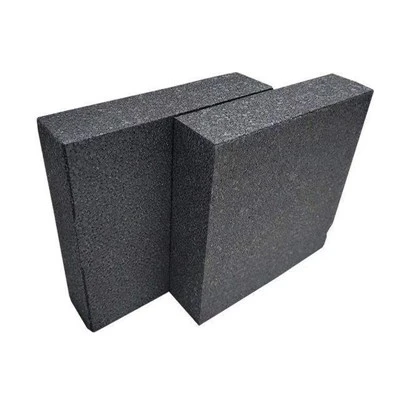
Rock Wool Board At the end of the day, air infiltration is all about energy efficiency and comfort, and XPS delivers on both when installed properly. It’s not a perfect product, but it’s one of the most reliable air barrier insulations on the market, with a track record that’s lasted decades. If you’re ready to talk about how XPS can work for your next project, reach out to our team to schedule a consultation. We’ll help you get the right product, the right guidance, and the support to make sure your build is air-tight, energy-efficient, and built to last.
References
- Department of Energy. (2021). Rigid Foam Insulation Performance in Building Envelopes. U.S. Department of Energy Office of Energy Efficiency and Renewable Energy.
- National Institute of Building Sciences. (2019). Long-Term Durability of Insulation Air Barrier Systems. NIBS Building Technology Library.
- International Code Council. (2022). International Energy Conservation Code (IECC) Section C402: Air Barrier Requirements. International Code Council.
- ASTM International. (2020). Standard Test Method for Air Permeance of Building Materials (ASTM E96). ASTM International.
Shanxi Rongshengchang Trading Co., Ltd.
As one of the most professional extruded polystyrene suppliers in China, we’re featured by quality products and good price. Please rest assured to buy premium extruded polystyrene for sale here from our factory. Welcome to view our website for more information.
Address: No.1602, 16th Floor, Unit 4, Building 13, Pingyang Jingyuan, No.65 Pingyang Road, Pingyang Road Street, Xiaodian District, Shanxi Province, China
E-mail: postmaster@rongshengchang.com
WebSite: https://www.rongshengchang.com/
