Hey folks, if you’ve ever walked past a loading dock at a warehouse, a garage with a big sectional overhead door, or even a factory with a roll-up door that moves smooth as butter, you’ve probably taken that silent, flawless operation for granted. But here’s the tea: none of that happens without a tiny, underrated hero right inside that door’s motor—the gearbox. As a supplier of industrial door geared motors, I get asked all the time: “Why’s the gearbox so important? Can’t the motor just turn the door directly?” Let me break this down like we’re chatting over coffee, no confusing jargon, just real stuff that matters for anyone relying on industrial doors to work 24/7. Industrial Door Geared Motor
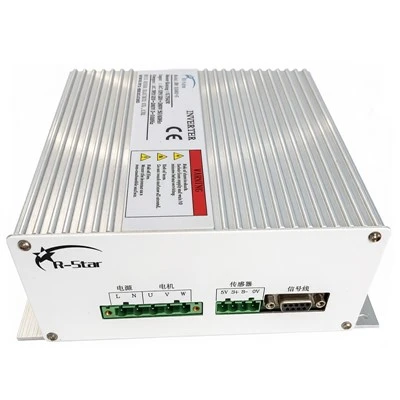
First, let’s keep it simple—what even is this gearbox we’re talking about? It’s not some fancy, unpronounceable part only engineers understand. Think of it as the middleman between the electric motor and the door itself. The motor’s job is to spin fast, right? Like, really fast—way too fast to lift or move a 1,000-pound sectional door or a 50-foot roll-up door without snapping something. The gearbox takes that high-speed, low-torque spin from the motor and cranks it into slow, powerful torque that’s exactly what the door needs. That’s the core job, but there’s way more to it than just speeding things up (or, more accurately, slowing down the rotation and boosting force).
Let’s start with torque, because that’s where most people go wrong when they think motors can do it all. Torque is basically rotational force—how much “push” something has to turn or lift a heavy load. A standard electric motor for industrial doors might spin at 1,500 or 3,000 RPM (rotations per minute) if you let it, but that’s like revving a sports car at full red line in first gear—great for speed, useless for pulling a trailer full of bricks. Our industrial doors? Those big steel sectional doors, insulated factory doors, even high-speed doors that zip up need enough force to overcome their own weight, friction from the tracks, wind resistance when they’re partially open, and sometimes even a little extra to clear debris stuck in the rails. A motor spinning at 3,000 RPM doesn’t have that kind of oomph; the gearbox changes the gear ratio to dial that torque up. For example, if a gearbox has a 30:1 ratio, that means the motor spins 30 times for every single rotation of the door’s drive shaft. Each of those rotations multiplies the force, so suddenly you’ve got all the power you need to lift a heavy door without the motor working itself to death.
But here’s the thing: if we didn’t have that gearbox, the motor would have to work way harder. Constantly running at max output to fight the door’s weight would burn out the windings, overheat, and die way sooner. We’ve had customers skip adding a proper gearbox on a cheap motor before, and they were replacing the motor every 6 months instead of 5+ years like they should. That’s a huge downtime cost—if your loading dock door is broken, you can’t unload trucks, which costs you money every hour it’s out of commission. The gearbox reduces the load on the motor, so it doesn’t overwork, which directly extends the motor’s lifespan. That’s not just a nice perk; that’s a bottom-line saver for any business.
Next up, speed control, and I’m not just talking about “fast vs slow.” Industrial doors have very specific speed requirements depending on what they’re used for. A garage door might open in 10 seconds, but a high-speed door on a food processing plant or a cold storage facility? It needs to open in 1-2 seconds to keep temperature control, prevent pests from getting in, and speed up workflow. A standard motor can’t adjust its speed on its own that much—its RPM is fixed (or has only two settings: high and low). The gearbox lets us fine-tune that speed to exactly what the door needs. For a slow, heavy sectional door in a warehouse, we might set the gear ratio to give a door speed of 6 inches per second to avoid slamming into the top frame (that’s a safety hazard, by the way—slamming doors cause damage to both the door and whatever’s behind it). For a high-speed door, a different gear ratio gives that quick zip without the motor spinning so fast it fails. It’s all about matching the speed to the application, and the gearbox is the only part that can make that precise adjustment without rewiring the whole motor.
Wait, let’s not sleep on safety. Industrial doors aren’t toys—they can crush fingers, break bones, or even cause fatal accidents if they malfunction. The gearbox plays a big role in safety features that matter every single day. First, it acts as a mechanical brake buffer. If the power cuts out (and let’s be real, power outages happen, especially in factories), you need to be able to manually open the door without it crashing down on you or a truck. The gearbox has a self-locking feature (that’s a thing in many gear designs, like worm gears, which we use a lot for industrial doors) that keeps the door from rolling backward when it’s open. No gearbox, no lock—door slams shut, disaster. Also, if the door hits an obstacle while closing, the gearbox absorbs that shock instead of the motor or the door’s track bending. We’ve seen it happen: a pallet falls in front of a door, the motor would keep pushing if not for the gearbox, which slips or disengages slightly to prevent breaking costly parts. That’s a safety and money saver rolled into one.
Durability, too—industrial environments are rough. We’re talking about dust, moisture, extreme temperatures (freezing cold in cold storage, scorching heat in metal fabrication plants), and constant use—some doors cycle 100+ times a day, every day, year-round. The gearbox is built to handle that abuse. It’s made of heavy-duty materials (cast iron housing, hardened steel gears, not the flimsy plastic stuff you get on cheap consumer garage doors) because it’s taking all that torque and force day in and day out. Without a properly designed gearbox, the gears would wear out in months, not years. We test our geared motors for 10,000+ cycles in temperatures from -20°F to 120°F, and the gearbox never skips a beat. Cheaper suppliers skip that, use cheap gears, and their customers end up replacing the whole unit every year. That’s why investing in a good gearbox isn’t a cost—it’s an investment.
Now, let’s talk about a common mistake I see all the time: mixing up gearbox size for the door’s load. A lot of people think, “Bigger door = bigger gearbox,” but it’s not that simple. It’s about calculating the total required torque, which factors in door weight, track friction, wind load (especially for exterior doors that catch wind), and how often the door cycles. A 10-foot wide warehouse door that weighs 800 pounds needs a different gear ratio than a 15-foot wide door that weighs 1,200 pounds—even though the size difference isn’t huge, the torque needed jumps a lot. If you pick a gearbox that’s too small, it’ll overheat, wear out fast, and the door will move slow or uneven. Too big, and you’re wasting money on unnecessary parts, and the door might move too fast, creating a safety hazard. We do custom calculations for every customer, because one size never fits all when it comes to industrial door geared motors.
Another thing: energy efficiency. I know, I know, industrial doors don’t use that much energy, but every little bit adds up when you have 10 loading docks running 24/7. The gearbox’s design affects how much power the motor uses. A well-matched gearbox doesn’t make the motor work harder than it has to, so it uses less electricity. That’s not just good for your utility bill—it’s good for the planet, too. We’ve had customers tell us that after switching to our geared motors with properly sized gearboxes, their monthly electric bill for doors dropped by 10-15%. That’s real money.
Wait, let’s get specific about a real example. Last year, we had a customer with a cold storage facility in Minnesota. Their old door motor was a cheap, direct-drive unit—no gearbox. The door was freezing up because of the cold, so the motor had to push extra hard to move it. The motor would overheat in the warm loading dock area, then freeze up when it went to work. They were replacing the motor every 4 months, and downtime was costing them $2,000 a day every time it broke. We installed our geared motor with a low-temperature rated gearbox (gears lubricated for cold weather, sealed housing to keep frost out) and adjusted the gear ratio for their 1,000-pound insulated door. Now, the motor runs cool in both the freezer and the dock, the door moves smooth, and they haven’t had to replace a part in over a year. That’s the difference the right gearbox makes.
Let me address the elephant in the room: why do some suppliers skip the gearbox? Because it adds a tiny bit to the upfront cost, right? But here’s the math: a cheap direct-drive motor is $500, but it dies in 6 months, plus downtime costs. A good geared motor is $800, lasts 5+ years, no downtime, and uses less energy. Over 5 years, the geared motor is $800 vs 10 direct-drive motors at $500 each = $5,000. That’s a no-brainer, but a lot of people don’t look past the upfront price. That’s where we come in—we don’t just sell you a part, we explain the long-term benefits so you don’t get stuck with constant repairs and downtime.
So to wrap this up, the gearbox isn’t just a “gear thing” in the motor—it’s the backbone of the whole industrial door system. It handles torque so the motor doesn’t burn out, controls speed for safety and workflow, protects against shock loads, survives harsh industrial environments, boosts energy efficiency, and keeps your door running when you need it most. Without it, industrial doors would be heavy, slow, unreliable, and dangerous.
If you’re running a warehouse, a factory, a cold storage facility, or any business with industrial doors that need to work day in and day out, you’re probably dealing with motor or door issues that could be fixed with a better geared motor. We’ve worked with all kinds of businesses, from small manufacturing shops to big distribution centers, and we know exactly what you need. If you’re tired of replacing motors every few months, dealing with broken doors during peak hours, or wasting money on inefficient parts, hit us up to chat about your needs. We can walk you through gear ratios, load calculations, whatever you need to get the right setup for your doors. No salesy nonsense, just honest info about what works and what doesn’t.
Stretch Wrapper Control System References:
- Industrial Door Motor and Gearbox Design Guide. National Door and Access Systems Manufacturers Association (DASMA), 2022.
- Torque Requirements for Overhead Industrial Doors. Journal of Industrial Engineering, Vol. 18, No. 3, 2021, pp. 45-52.
- Gearbox Durability in Extreme Operating Environments. Mechanical Design International, Vol. 14, No. 2, 2023, pp. 112-118.
- Energy Efficiency of Geared Motor Systems for Commercial Access Doors. U.S. Department of Energy, Office of Energy Efficiency and Renewable Energy, 2022.
Wuxi Rstar Electric Co., Ltd.
With abundant experience, we are one of the most professional industrial door geared motor manufacturers and suppliers in China. Welcome to wholesale bulk customized industrial door geared motor at competitive price from our factory. If you have any enquiry about quotation, please feel free to email us.
Address: 9th Floor, Building 9, Shengfeng Lianzhi Valley, No.67 Zhujiang Road, Xinwu District, Wuxi City
E-mail: rstarbz@163.com
WebSite: https://www.rstar-wx.com/
