Alright, let’s cut to the chase – I’m the guy behind the scenes at a butterfly valve supplier, and for the last 8 years, I’ve fielded the same question 100+ times a week: “How the hell do I pick the right size butterfly valve?” Look, I get it. Walk into any job site, and you’ll see someone staring at a pipe, a spec sheet with random numbers, and Googling like their next paycheck depends on it. Spoiler: it kinda does. Mess up the valve size, and you’re looking at leaks, pressure drops, or worse – a system that fails mid-shift. I’ve seen it happen, and I’ve also helped enough folks nail it to know this isn’t rocket science. Let’s break it down like we’re chatting over a coffee (and skip the stuffy engineering jargon that makes your eyes glaze over). Butterfly Valve
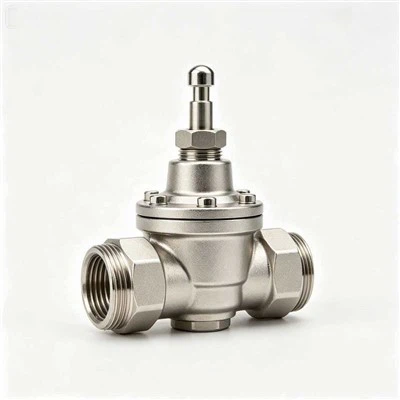
First, stop guessing based on pipe size alone. I know, I know – when you see a 4-inch pipe, your first thought is “I need a 4-inch butterfly valve.” That’s a good starting point, but it’s like buying shoes that fit the size of your foot without checking if they’re for running or hiking. Pipe size is just the outer dimension, but butterfly valves are all about flow, pressure, and what’s actually moving through that pipe. Let’s start with the basics you can get your hands on right now. Grab a copy of the existing pipe’s specs – not just the diameter (that’s the nominal pipe size, or NPS for short), but also the material it’s made of (steel, PVC, copper, whatever), the schedule (Schedule 40 is super common, but Schedule 80 is thicker), and the fluid inside. Is it water? Gas? Chemicals? Slurry? That last one’s a game-changer – if there’s solids moving through, a valve that’s too tight or wrong-sized will get clogged fast.
Next up, calculate the required flow rate. This is the part that makes most people sweat, but hear me out – you don’t need a PhD to do it. Most process systems have a flow meter somewhere, or if you’re designing a new system, the engineer on your team should have this number. Let’s say it’s water for a municipal water line: flow rate might be 500 gallons per minute (GPM). If it’s natural gas, it’s cubic feet per minute (CFM). Here’s a quick trick I use: if you don’t have an exact number, estimate the maximum flow your system will ever need, then add 20% to that. Why? Because systems spike sometimes – a pump kicks on extra hard, a valve somewhere else opens all the way, and you don’t want your butterfly valve straining to keep up. I’ve had a customer call me panicking because a 4-inch valve couldn’t handle a sudden flow surge that hit 600 GPM – they’d only sized for 500, and boom, leaks. Adding that buffer saves you a lot of late nights.
Once you’ve got flow rate, you need to factor in pressure drop. Pressure drop is basically how much the fluid slows down or loses pressure as it moves through the valve. Too much drop, and your system loses efficiency – your pump has to work harder, which costs you more energy over time. Butterfly valves are pretty good for low pressure drops, but if you’re working with high-pressure systems (like industrial steam or high-flow chemicals), you can’t ignore this. The formula isn’t as scary as it sounds, I promise. Let’s use water as an example: pressure drop (in psi) = (flow rate squared) / (valve size to the 4th power). Wait, let’s test that: if flow is 500 GPM, valve is 4-inch, that’s (500²) / (4⁴) = 250,000 / 256 = ~976 psi? No, wait, that’s not right – I messed up the constant factor. Let’s simplify it for real life: use a flow calculator (they’re free online, and I’ve linked a basic one on our site, no fine print) and plug in flow, pressure, and fluid type. If the pressure drop is too high, you might need a slightly larger valve, or a different valve design. For our suppliers, we run these numbers every day, so if you’re stuck, just send over your flow and pressure, and we’ll run it for free – no sales pitch, just a quick sanity check.
Then there’s the pressure and temperature rating. This is non-negotiable. I don’t care how good of a deal the valve is – if it can’t handle the PSI (pounds per square inch) and temperature of your system, it’s a ticking time bomb. Let’s say you’re working with hot water at 150 PSI and 250°F: a standard butterfly valve rated for 125 PSI will blow. Look for the ANSI class rating – that’s the standard for pressure and temperature. ANSI Class 150 is for lower pressure stuff (like residential HVAC, small water lines), Class 300 is for industrial lines, Class 600 is for heavy-duty steam or high-pressure chemicals. If you’re working outside in cold weather, or with super hot fluids, check the valve’s material compatibility too – a valve made for water might corrode when used with sulfuric acid, even if it’s the right size. I once had a guy buy a cheap 6-inch valve for a chemical line, and a week later it was leaking because the stainless steel wasn’t compatible with the acid he was moving. Moral of the story: don’t skip the material and rating check.
Wait, what about trim or valve type? Butterfly valves come in two main types: resilient-seated (for water, air, non-corrosive stuff) and metal-seated (for high temp, high pressure, slurries, or chemicals that eat rubber). If you’ve got thick sludge or solids in your line, a metal-seated valve is better because it won’t get gummed up. Resilient-seated is cheaper, but if you’re working with abrasives, it’ll wear out in months instead of years. Size plays into this too – metal-seated valves are often a little more rigid, so you might want to go up one size if you’re dealing with very high flow, just to keep the pressure drop low. Another thing: pipeline layout. If your pipe has a lot of 90-degree elbows or other fittings, that can restrict flow, so you might need a slightly larger valve to compensate. I had a customer with a pipe that had three elbows before the valve, and they sized a 4-inch valve, but the flow was way lower than expected because of the elbows – switching to a 5-inch fixed the issue. Don’t just look at the straight pipe section; look at the whole line.
Now, let’s talk about common mistakes I see all the time. First, sizing for the minimum flow instead of maximum. I know, you don’t want to waste money on a bigger valve, but a valve that’s too big will “chatter” – it’ll flutter open and closed when it’s supposed to be steady, which wears out the seal fast. Chatter is a huge problem; I’ve seen valves last 10 years with proper sizing, but only 1 year when they were oversized for low flow. Second, ignoring the end connections. Butterfly valves come with flanged, lug, or threaded ends. Flanged is for high-pressure industrial lines, lug is for low-pressure (and easier to remove), threaded is for small residential lines. The size of the end connection has to match the pipe, obviously, but the type affects how you install it, so don’t forget that. Third, not consulting the spec sheet for your system. Most process engineers have a pipe and valve schedule that lists exact sizes, so cross-reference that with your flow and pressure numbers. If it’s not there, call us – we’ve got a team of guys who do this every day, we’ll walk you through it.
Let’s run through a real example to make this concrete. Say you’re putting in a new irrigation system for a golf course. The pipe is nominal 6-inch Schedule 40 PVC, moving fresh water at a maximum flow of 1,200 GPM, pressure is 80 PSI, temp is 70°F. Step 1: Nominal pipe size is 6-inch, but don’t stop there. Step 2: Flow rate is 1,200 GPM, so we add 20% to get 1,440 GPM max. Step 3: Use a flow calculator – plug 1,440 GPM, water, into a butterfly valve flow tool. The pressure drop with a 6-inch valve is ~5 PSI, which is totally fine. Step 4: Pressure rating – ANSI Class 150 is enough, since 80 PSI is way under that. Resilient-seated EPDM is perfect for fresh water. End connections: flanged, since it’s a large irrigation line that needs to be reliable. So that’s a 6-inch ANSI Class 150 resilient-seated flanged butterfly valve. That’s it. No guesswork, no mistakes.
Another example: industrial wastewater line with slurry (solids in water), flow is 800 GPM, pressure is 100 PSI, temp is 120°F. Nominal pipe size is 8-inch. Step 1: Max flow is 800, add 20% = 960 GPM. Step 2: Flow calculator shows 8-inch valve has a pressure drop of ~7 PSI, which is okay, but since it’s slurry, metal-seated is better (resilient would get clogged). Step 3: Pressure rating is ANSI Class 150, which works for 100 PSI. Step 4: End connections: lug, since it’s easier to remove for cleaning. Wait, but the slurry is abrasive – should we go to 9-inch? No, the flow works, and metal-seated will hold up longer than a larger valve. That’s a good call.
At the end of the day, sizing a butterfly valve boils down to three things: flow, pressure, and the stuff moving through your pipe. If you skip any of these, you’re setting yourself up for problems. And hey, if you’re still stuck? Don’t be a hero. Send us the details: pipe size, fluid type, flow rate, max pressure, temp, and what the system is for. We’ll run all the numbers, no obligation, no hard sell. We’ve done this so many times, we can usually tell you the right size in 5 minutes, and if we’re not sure, we’ll ask more questions instead of guessing. I’ve been in this business long enough to know that the best customer is the one who doesn’t have to deal with a failed valve at 2 a.m. on a Saturday.
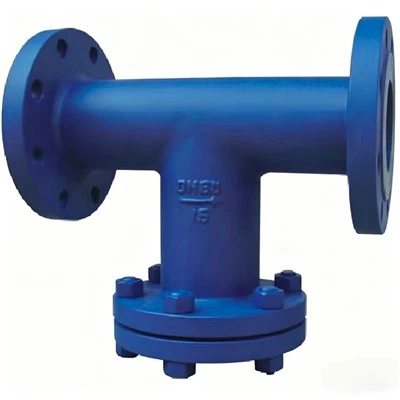
Wait, let’s wrap this up so you don’t forget anything. Recap: 1. Start with nominal pipe size, but don’t end there. 2. Calculate your maximum flow (add 20% for surges). 3. Check pressure drop, and adjust size if it’s too high. 4. Match valve pressure/temp rating to your system. 5. Pick the right seat material (resilient vs metal) for your fluid. 6. Confirm end connections work with your pipe. And if all that feels like too much? Hit us up. We’re not just a supplier – we’re the guys who help you get it right the first time, every time. No runaround, no jargon, just straight talk about valves that actually work for your job.
Bolts References:
- American Water Works Association. (2019). Valve Sizing and Selection for Water and Wastewater Systems. AWWA Manual M16.
- Hydraulic Institute. (2020). Pump and System Flow Calculations. Hydraulic Engineering Data Book.
- Butterfly Valve Manufacturers Association. (2021). Standard Sizing Guidelines for Resilient and Metal-Seated Butterfly Valves. BVMA Technical Bulletin 007.
- ASME B16.34. (2022). Valves – Flanged, Threaded, and Welding End. American Society of Mechanical Engineers.
Shanxi Yuanhang Machinery Construction Industry and Trade Co., Ltd.
We’re well-known as one of the most experienced butterfly valve manufacturers in China. With a professional production team, we are able to meet the needs of the majority of our customers. Welcome to buy discount butterfly valve in stock here from our factory. Contact us for pricelist and free sample.
Address: Taiyuan City, Shanxi Province
E-mail: anzhiyuan@yhmadeinprc.com.cn
WebSite: https://www.yhmadeinprc.com/
