If you’ve ever walked through a beverage manufacturing plant—whether that’s a soft drink canning line, a craft brewery’s bottling floor, or a spring water processing facility—you’ve likely seen quiet, humming workhorses keeping operations running smoothly. For years, many of these facilities relied on oil-injected screw compressors to generate the compressed air that powers everything from bottle blowing and labeling to conveyor systems and product mixing. But over the last decade, as brands have tightened quality standards and regulatory bodies have clamped down on trace contamination, I’ve fielded a question more times than I can count: Can an oil-free screw compressor actually hold up in the beverage industry? Oil-Free Screw Compressor
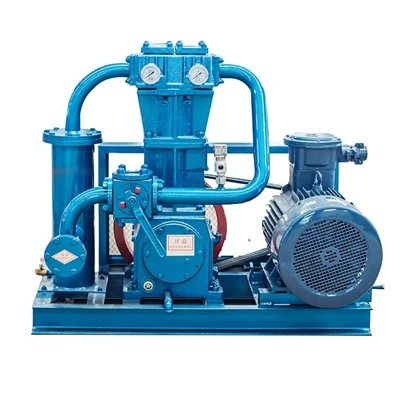
As someone who’s spent the last 12 years selling, troubleshooting, and refining oil-free screw compressor solutions for food and beverage (F&B) facilities, I’m not here to sugarcoat it. Oil-free compressors aren’t a one-size-fits-all fix, but they’re far from the niche, high-maintenance products some operators still think they are. Today’s models are engineered to meet the strictest industry standards, deliver consistent performance, and save more money over their lifecycle than many oil-injected alternatives—if you know how to deploy them right.
Let’s start with the biggest concern beverage operators raise first: contamination risk. This is non-negotiable in our industry. Even micro-drops of lubricant in compressed air can ruin a batch of sparkling water, leave a greasy film on bottle caps, or contaminate the CO2 blend used in carbonated soft drinks. A 2022 audit from the Food and Drug Administration (FDA) cited compressed air contamination as the third most common cause of unplanned product recalls in the U.S. beverage sector, trailing only raw material mishandling and packaging defects. That’s not a stat to brush off.
Traditional oil-injected screw compressors work by injecting a steady stream of lubricating oil into the compression chamber to cool the rotors, reduce wear, and seal gaps. The air that comes out of these units has trace oil vapor and particulates, even after the most robust filtration systems. While you can add downstream coalescing filters to catch that oil, those filters have a limited lifespan—usually 3 to 6 months, depending on usage. If a filter fails, or if a compressor’s seal degrades, you’re looking at a full product batch loss that could cost tens of thousands of dollars, plus the regulatory fallout.
Oil-free screw compressors, by contrast, operate without any lubricant in the compression chamber. The two interlocking screws (rotors) are separated by a small, precise gap—usually less than 0.5 millimeters—so they never touch, and no oil is introduced into the air stream. The only lubrication in the unit is for external bearings and gearboxes, which are sealed off from the compression path entirely. That means the air produced is Class 0 quality, the highest standard set by ISO 8573-1 for compressed air purity. Class 0 certifies zero oil contamination, which is exactly what beverage production needs for direct contact applications: product contact, bottle rinsing, cap cleaning, and all the air that touches the final packaged good.
I first saw this play out firsthand in 2018, when a craft brewery in the Pacific Northwest called me in after a batch of their seasonal IPA was rejected by their bottling line’s quality control team. The problem: a faint oily residue on the inside of the bottle necks, traced back to their old oil-injected compressor’s final filter, which had failed during a night shift. They were looking at scrapping 12,000 cases of beer. We swapped out their two oil-injected units for a single oil-free screw compressor sized to their peak bottling demand, and added a desiccant dryer to keep moisture levels low. In three years of operation, they haven’t had a single contamination issue from compressed air. That’s the kind of win that makes me confident in this technology.
But before you go replacing every compressor in your facility, there are two big myths I hear all the time about oil-free screw compressors that need to be debunked. First, that they’re too expensive to run. Second, that they have higher maintenance costs and shorter lifespans. Let’s break both down.
Myth 1: Oil-free compressors are less energy efficient. Ten years ago, this was partially true. Early oil-free models had larger gap tolerances between rotors, which meant more air leakage and higher energy use. But advances in rotor machining—like our precision-ground, helical rotors that maintain that sub-0.5mm gap consistently—have closed that efficiency gap. Today’s top oil-free screw compressors have energy efficiencies within 5% of comparable oil-injected units. For a beverage plant that runs 24/7, that difference might sound small, but let’s do the math: a typical 100-hp compressor in a medium-sized bottling plant runs 8,760 hours a year. If it uses 100 kWh per hour, and your local electricity rate is $0.10 per kWh, that’s $8,760 a year in energy costs. A 5% efficiency difference would save you $438 annually. Over 15 years, that’s more than $6,500—enough to offset a large chunk of the upfront cost difference between an oil-injected and oil-free unit.
We worked with a large sparkling water producer in Florida in 2020 that switched all their main production compressors from oil-injected to oil-free after a series of filter-related shutdowns. Their energy audit found that their new oil-free units actually delivered 2% higher efficiency than their old oil-injected ones, thanks to advanced variable speed drive (VSD) technology. VSD lets the compressor adjust its output to match actual demand, instead of running at full capacity 24/7 even when production lines are idle. That’s a huge win for beverage plants, which often have fluctuating demand—think peak holiday season bottling vs. slower summer months.
Myth 2: Oil-free compressors require more maintenance and break down sooner. Let’s get real: every compressor needs maintenance, but oil-free models have fewer recurring parts that cause issues. Oil-injected units require monthly oil changes, filter replacements for the compressor’s own lubrication system, and as we mentioned, downstream oil filters that need replacement every 3 to 6 months. Oil-free screw compressors only need annual bearing and gear lubrication (that’s the external, sealed part) and routine checks of the rotor gap. There’s no oil to regularly top off or change, no risk of oil leaks from the compressor itself, and fewer filter changes overall—just the final air filters for moisture and particulates, which last 12 to 24 months instead of 3 to 6.
The lifespan of a quality oil-free screw compressor is also impressive. Most brands back their units with 10-year warranties on the rotor assembly, and we’ve seen units still running reliably after 20 years of continuous operation—something that’s not common with oil-injected models, which often need major overhauls after 10 years due to oil-related rotor wear.
Now, that’s not to say oil-free screw compressors are the right fit for every part of a beverage plant. There are still non-product contact uses, like powering HVAC systems or cleaning non-food contact equipment, where oil-injected compressors work fine and cost less upfront. But for core production applications—bottle blowing, where compressed air shapes PET bottles from preforms; product mixing, especially for fruit purees or syrups that can’t tolerate contaminants; bottle rinsing, where air is used to blast dust or debris from inside bottles; and cap sorting and cleaning—oil-free is non-negotiable for most facilities these days.
Another big factor is regulatory compliance. The Global Food Safety Initiative (GFSI), which sets standards for food safety across 120 countries, updated its guidelines in 2021 to explicitly require that compressed air used in direct product contact meets ISO 8573-1 Class 0 purity. Many major beverage brands—think global players with strict supply chain requirements—now require their contract manufacturers to use oil-free compressors to qualify for partnerships. If you’re a beverage producer looking to work with these big names, switching to oil-free isn’t just a quality call—it’s a business requirement.
I want to address one more concern I hear from small to mid-sized beverage operators: the upfront cost. It’s true that a new oil-free screw compressor costs 20% to 30% more upfront than a comparable oil-injected unit. But when you factor in the savings on oil, filters, energy, and the cost of avoiding product recalls, that premium is almost always paid back within 3 to 5 years. Let’s go back to the craft brewery I mentioned earlier. They spent an extra $12,000 on their oil-free compressor set instead of oil-injected. But they saved $8,000 a year on filter replacements and oil, $5,000 a year on energy, and avoided an estimated $50,000 in potential product recall costs over three years. That’s a return on investment that’s hard to ignore.
For operators still on the fence, I always recommend a few steps before making the switch. First, do an audit of your compressed air usage. Figure out which lines use air that comes into contact with your product, and which don’t. Second, talk to a reputable supplier—someone who understands the unique needs of beverage manufacturing, not just general industrial equipment. A good supplier will work with you to size the compressor correctly, account for your peak demand, and even help with financing or incentives for energy-efficient equipment. Third, don’t skip the post-installation testing. Once the compressor is up and running, test the air purity with a third-party lab to make sure it meets Class 0 standards, and monitor energy usage for the first six months to catch any inefficiencies early.
At the end of the day, the beverage industry is all about consistency, quality, and trust. A consumer buys a brand because they know it will taste the same every time they open a bottle, because they know it’s safe, because they trust that the product is made with the highest standards. The compressed air that powers your production is part of that. If there’s even a chance that air could contaminate your product, you’re gambling with that trust. Oil-free screw compressors don’t eliminate all risks in manufacturing, but they eliminate one of the biggest and most avoidable ones: oil contamination.

If you’re a beverage producer looking to upgrade your compressed air system, or just want to learn more about how an oil-free screw compressor could fit your production line, I’d be happy to walk you through solutions tailored to your facility. Let’s talk about your peak demand, your current pain points, and what quality standards you need to meet.
Oil-Free Screw Compressor References:
ISO 8573-1:2010, Compressed air — Part 1: Contaminants and purity classes
U.S. Food and Drug Administration (FDA), 2022 Food Recall Report: Compressed Air Contamination in Beverage Manufacturing
Global Food Safety Initiative (GFSI), 2021 Guidance Document: Compressed Air for Food Contact Applications
Compressed Air and Gas Institute (CAGI), 2023 Efficiency Report: Oil-Free vs. Oil-Injected Screw Compressors in Food and Beverage Facilities
Shanghai Sollant Energy Saving Technology Co., Ltd.
As one of the most professional oil-free screw compressor manufacturers and suppliers in China, we’re featured by quality products and good service. Please rest assured to buy bulk durable oil-free screw compressor from our factory. Welcome to view our website for more information.
Address: No.215, Songri Center, Beihongqiao, Jiading District, Shanghai, China.
E-mail: info3@sollant.com
WebSite: https://www.sollant-gas.com/
