Hey there! I’m a supplier of Unilateral Expandable Container Houses, and I often get asked about the differences between these nifty structures and traditional container houses. So, I thought I’d break it down for you in this blog post. Unilateral Expandable Container House
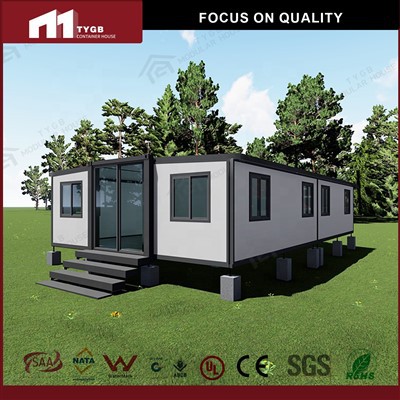
1. Design and Expandability
Let’s start with the most obvious difference: expandability. Traditional container houses are, well, pretty much fixed in size. They’re made from standard shipping containers, which come in set dimensions like 20 – foot or 40 – foot lengths. Once you’ve got your container, that’s the size you’re stuck with. You can do some internal modifications, like adding partitions or storage, but you can’t really change the overall footprint.
On the other hand, Unilateral Expandable Container Houses are designed with flexibility in mind. As the name suggests, they can expand on one side. This is a game – changer! You start with a compact, transport – friendly container. When you reach your destination, you can expand it to create a much larger living or working space. It’s like having a small box that can turn into a big room. This expandability is great for people who need more space but also want the convenience of easy transportation.
2. Space Utilization
Traditional container houses have a limited interior space due to their fixed dimensions. The standard shape of a shipping container means that you have to work within a rectangular box. This can make it a bit tricky to design a layout that maximizes the available space. You might end up with awkward corners or areas that are hard to use effectively.
In contrast, Unilateral Expandable Container Houses offer better space utilization. When you expand the house, you create a new area that can be used for various purposes. For example, you could use the expanded space as a living room, a bedroom, or even a home office. You can also design the layout more freely because you’re not restricted by the original container shape. You can create open – plan areas or separate rooms as needed, giving you more options to make the most of the space.
3. Mobility and Installation
When it comes to mobility, both types of container houses have their advantages. Traditional container houses are relatively easy to transport because they’re in a standard shipping container form. You can use regular transportation methods like trucks, trains, or ships to move them from one place to another. However, once they’re on – site, installation can be a bit of a hassle. You need to make sure the foundation is level and stable, and then you have to secure the container in place.
Unilateral Expandable Container Houses are also highly mobile. They can be transported in their compact form, just like traditional container houses. But the real advantage comes during installation. Since they can expand on – site, you don’t have to worry about moving a large, pre – assembled structure. The expansion process is usually quick and straightforward, which means you can have your house up and running in no time. This is especially useful for temporary projects or locations where you need to set up quickly.
4. Cost
Cost is always a big factor when it comes to choosing a container house. Traditional container houses are generally more affordable in terms of the initial purchase price. Shipping containers are widely available and relatively inexpensive, so the base cost of a traditional container house is lower. However, when you factor in the cost of modifications and installation, the overall cost can add up. You might need to spend money on insulation, plumbing, and electrical work, as well as the cost of setting up a proper foundation.
Unilateral Expandable Container Houses, on the other hand, have a higher initial purchase price. The technology and design that allow for expandability come at a cost. But when you consider the long – term benefits, it might be worth the investment. You save on transportation costs because you’re moving a smaller, lighter structure. And the quick installation means you can start using your house sooner, which can save you money in the long run.
5. Aesthetics and Customization
Traditional container houses have a distinct industrial look. The corrugated metal exterior gives them a rugged, utilitarian appearance. While some people love this look, others might find it a bit too harsh or unappealing. Customization options for traditional container houses are limited. You can paint the exterior or add some decorative elements, but the overall shape and structure are still very much that of a shipping container.
Unilateral Expandable Container Houses offer more opportunities for customization and a more modern aesthetic. When the house is expanded, you can create a more open and inviting space. You can choose different exterior finishes, such as wood or siding, to give the house a more traditional or contemporary look. You can also design the interior to suit your specific needs and style, with more options for windows, doors, and room layouts.
6. Energy Efficiency
Energy efficiency is an important consideration for any type of housing. Traditional container houses can be challenging to insulate properly. The metal walls of the shipping container conduct heat and cold easily, which means you might have to spend more on heating and cooling. You need to add insulation to the walls, floors, and ceilings, but even then, it can be difficult to achieve a high level of energy efficiency.
Unilateral Expandable Container Houses, on the other hand, can be designed with better energy efficiency in mind. The expandable section can be built with more insulation and better – sealed windows and doors. This helps to reduce heat transfer and keep the interior temperature more stable. You can also incorporate energy – saving features like solar panels or energy – efficient appliances, which can further reduce your energy costs.
Why Choose a Unilateral Expandable Container House?
If you’re still on the fence about whether a Unilateral Expandable Container House is right for you, let me give you a few more reasons to consider it. First of all, if you need a flexible living or working space, these houses are a great option. You can expand or contract the space depending on your needs, which is perfect for growing families or businesses that need to adapt to changing circumstances.
Secondly, if you’re looking for a house that can be set up quickly and easily, a Unilateral Expandable Container House is the way to go. The installation process is much faster than traditional container houses, which means you can start enjoying your new home or office sooner.

Finally, if you’re concerned about energy efficiency and environmental impact, these houses offer better options. You can design them to be more energy – efficient and use sustainable materials, which is good for both your wallet and the planet.
Let’s Talk!
Unilateral Expandable Container House If you’re interested in learning more about Unilateral Expandable Container Houses or are thinking about making a purchase, I’d love to chat with you. Whether you have questions about the design, cost, or installation process, I’m here to help. Just reach out, and we can start discussing how a Unilateral Expandable Container House can meet your needs.
References
- "Container Homes: Design, Build, Live" by Kieran Timbers and Tom Kundig
- "The Container House Book" by Matthew Miller
Hebei Tianyu Guangbo Module Housing Co., Ltd.
Hebei Tianyu Guangbo Module Housing Co., Ltd. is one of the most professional unilateral expandable container house manufacturers and suppliers in China, featured by quality products and good price. Please rest assured to buy waterproof unilateral expandable container house for sale here from our factory. Also, custom service is available.
Address: North of Xingwang Road and west of Wuguan Road in Wuyi County, Hengshui City, Hebei Province (south of Hebei Yingtong Textile Technology Co., Ltd.).
E-mail: jasonyao@tygbhouse.com
WebSite: https://www.hbtygbhouse.com/
