Hey there, if you’ve ever flipped a light switch, turned on your laptop, or cranked your car’s engine, you’ve interacted with something super important but probably never thought about: electrical switch contacts. I’m the owner of a small, no-BS electrical switch contacts supplier that’s been in the game for over 12 years, and trust me—this stuff isn’t just random metal bits. The material we choose for contacts makes or breaks how long a switch lasts, how well it works, and even how safe it is. Today, I’m breaking down the real materials we use, why each matters, and what you should know if you’re in the market. Electrical Switch Contacts
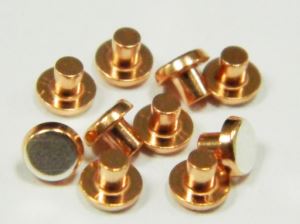
First, let’s get the basics out of the way—contacts are the little parts inside a switch that actually touch to let electricity flow, right? Every time you flip a switch, those two pieces of metal (or other material) press together, separate, and handle all the current. They’re under constant wear: heat, arcing (that little spark you see when you turn a switch off), corrosion, and high voltage. Pick the wrong material, and you’ll get a switch that dies in a year, or worse, shorts out.
Let’s start with the most common one you’ve definitely heard of: copper. Wait, not just any copper—oxygen-free copper (OFC), to be exact. Most people think copper’s just copper, but OFC is the good stuff. Why? Regular copper has little oxygen molecules trapped in it, which can cause problems when it’s soldered or exposed to heat—those oxygen pockets make it brittle. OFC is 99.99% pure, no oxygen, so it’s super conductive. Like, almost unbeatable for low-current applications—think residential light switches, small appliance buttons, that kind of thing. But here’s the catch: copper’s soft. If you leave copper contacts to handle high current, they’ll wear out fast. The constant pressure and friction will cause them to deform, and they’ll lose their ability to make a tight connection. That’s why we don’t use pure copper for heavy-duty stuff, like industrial switches or car starters. Also, copper corrodes easily if it’s exposed to moisture or harsh chemicals—even a little rust or tarnish can raise resistance and make the switch act up. Still, it’s cheap, easy to work with, and perfect for everyday low-use items.
Next up, the workhorse we use for 60% of our orders: silver. Oh man, silver is the goat when it comes to conductivity. It’s slightly better than copper, so it handles current way better, and it’s way more resistant to corrosion. Wait, silver does tarnish, right? But that tarnish is super thin—like a molecule-thick layer—and it doesn’t mess with conductivity the way copper’s corrosion does. That’s a huge win. Silver contacts are great for medium to high-current applications: circuit breakers, HVAC switches, even some automotive components. But here’s the downside: silver is expensive. Like, way more than copper. And if you use pure silver, it’s still soft, same as copper. So we almost never use pure silver—we alloy it with other metals to make it stronger. That leads me to the next material.
Silver alloys are where most of our go-to products live. Let’s break down the main ones: silver-nickel (AgNi), silver-cadmium (AgCd), and silver-tungsten (AgW). Wait, I know, cadmium sounds scary—old habits die hard, and some industrial applications still use AgCd because it handles arcing like a dream. When a switch opens, that spark (arcing) is super hot—like 10,000 degrees Fahrenheit hot. Arcing can melt pure silver, right? Adding nickel to silver makes it way harder, more resistant to arcing, and way more durable. AgNi is our top seller for general industrial switches, commercial lighting, and even power tools. It’s way cheaper than pure silver, lasts twice as long as pure copper, and doesn’t corrode easily. We’ve had customers use AgNi contacts in switches that run 24/7 in factories for 5 years without a single issue. Silver-tungsten? That’s for the heavy lifters. Tungsten is one of the hardest metals on Earth, so AgW contacts can handle insane currents and brutal arcing. We use these for welding equipment, high-voltage circuit breakers, and heavy machinery switches. They’re tough as nails, but yeah, tungsten makes them pricier, too.
Now, let’s talk about a material that’s been popping up more lately because sustainability matters: gold. Wait, gold? For switches? That sounds over-the-top, but hear me out. Gold is the most corrosion-resistant metal on the planet. It doesn’t rust, doesn’t tarnish, doesn’t react with anything—even if you spill soda on a switch or leave it in a damp garage for 20 years, gold contacts will still work. But here’s the thing: gold is super expensive, and it’s soft. So we only use gold for low-current, high-reliability applications—like medical devices, aerospace switches, or the touch-sensitive buttons on your laptop. Those buttons only need a tiny amount of current (to register a touch), and if they fail, you’re screwed. For example, a medical defibrillator’s switch can’t just quit—gold contacts make sure of that. We also plate other contacts with a thin layer of gold, like silver contacts, to add corrosion protection. That way, you get the conductivity of silver and the durability of gold, without paying for a full gold part.
Wait, what about non-metal materials? Yeah, I almost forgot—some switches, especially low-voltage ones in electronics, use things like graphite or carbon composites. Graphite is conductive, cheap, and super slippery. It doesn’t wear down as fast as metal in some low-friction applications, like the sliders on a volume knob or the buttons inside a remote. Carbon composites are even better for high-temperature environments—like switches in ovens or engine compartments, where metal contacts might expand too much and lose their connection. But non-metal contacts can’t handle high current, so they’re only for small stuff. I remember a customer who tried using graphite contacts in a garage door opener—they burned out in a week because the opener draws way too much current for graphite. Lesson there, always match the material to the job.
Now, let’s get real about what you should actually look for when buying switch contacts. I see so many guys cut corners by buying cheap copper contacts for heavy-duty use, and they end up calling me a month later complaining their switches keep failing. Here’s the rule of thumb: match the material to the current and environment. For residential light switches? Copper or AgNi is perfect. For a factory switch that runs 10 hours a day? AgNi or AgW if it’s high current. For a medical device? Gold-plated silver. For a remote? Graphite. Also, check for contact size—bigger contacts mean more surface area, so they can handle more current. Even if you use the right material, a tiny contact will burn out fast.
Wait, let me throw in a quick story to drive this home. Last year, a guy from a small construction company reached out to me. He’d been buying switch contacts from a cheap online supplier for his site’s electrical panels, and every 3 months, he had to replace half the panels. His electrician told him it was the contacts—they were cheap copper that corroded from the dust and moisture on the job site. I hooked him up with our AgNi contacts, and he hasn’t had a single failure in 10 months. That’s the difference between knowing what material to use and just grabbing the cheapest one.
Another thing people don’t talk about: contact resistance. That’s the amount of electricity lost when it flows through the contacts. If the material is high resistance, you get heat, which can melt the switch or cause a fire. Silver and copper have the lowest resistance, which is why they’re so popular. Gold is a little higher, but not enough to matter for low current. Tungsten has higher resistance, but it’s so good at handling arcing that it’s worth it for heavy use.
Now, if you’re here because you need switch contacts for your next project, let me be straight with you. We don’t do generic garbage. We work with contractors, industrial engineers, medical device makers, even small tech startups to get the right material for their specific needs. No upselling, no pushing a silver contact on a job that only needs copper, no lying about specs. I’ve been in this long enough to know that a customer who gets the right part once will come back, and that’s how we stay in business.
If you’re tired of switch contacts that fail too fast, or you’re working on a project and need help picking the right material, hit us up. We can walk through your needs, send samples, and give you a quote that doesn’t break the bank. No hidden fees, no fine print, just real advice from guys who actually deal with this stuff every day.
Wait, let me wrap this up before it gets too long. The next time you flip a switch, think about the little part inside that’s carrying all that electricity. The material isn’t just a detail—it’s what separates a switch that lasts 5 years from one that lasts 50, or one that works safely from one that’s a fire hazard. From oxygen-free copper for everyday use to silver-tungsten for heavy industrial jobs, and gold for the critical stuff, each material has its spot. And if you need to make sure you’re using the right one for your project, don’t guess—reach out.

If you’re in the market for electrical switch contacts, connect with our team to discuss your requirements and get a tailored solution.
Silver Alloy Wire References:
- Lindley, P. (2017). Electrical Contacts: Principles and Applications. CRC Press.
- "Switch Contact Materials and Their Applications", IEEE Transactions on Components, Hybrids, and Manufacturing Technology, Vol. 12, No. 4, 1989.
- "Silver Alloys for Electrical Contacts", Silver Institute Technical Report, 2021.
- Carbon and Graphite Contacts for Low-Voltage Switches, ASM International Materials Park, 2019.
Wenzhou Juyang Industry and Trade Co., Ltd.
As one of the most professional electrical switch contacts manufacturers and suppliers in China, we have world-leading production equipment and strong manufacturing capabilities. Please feel free to wholesale advanced electrical switch contacts at competitive price from our factory. Contact us for free sample.
Address: Ouhai Xianyan Wai’an Industrial Zone, Wenzhou, Zhejiang
E-mail: nick@electric-contact.com
WebSite: https://www.jy-electriccontact.com/
