Hey there, fellow parents, caregivers, and anyone who’s ever rummaged through a diaper bag at 2 a.m. for a backup wipe! Let’s cut to the chase: you’ve probably used hundreds, maybe thousands of baby wipes in your time, but have you ever stopped to actually think about what they feel like—like, really like? Not just “soft” or “rough,” but the tiny, specific texture details that make or break a wipe that works for squirming babies, messy hands, and even quick adult wipes in a pinch. As a baby wipes supplier who’s spent way too many late nights testing wipe rolls (my poor hands, and also my cat, who insists on being the official “squish test volunteer”), let’s break this down—no stuffy science jargon, just real talk from someone who’s deep in the wipe game. Baby Wipes
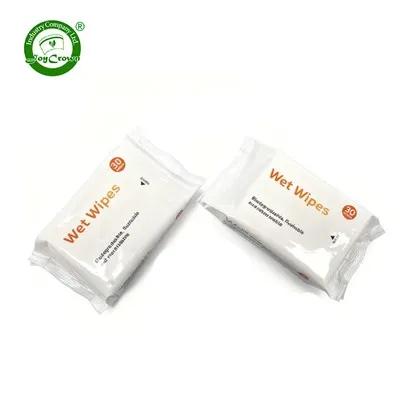
First off, let’s get one thing straight: baby wipe texture isn’t random. It’s not just a cloth that someone sprayed with water. The materials we pick, the way we weave or emboss them, even how much (or how little) liquid we add all play a role. I’ve seen cheap wipes that feel like thin paper towels, and luxury ones that feel like a fancy washcloth, but the sweet spot is somewhere in between—for babies’ sensitive skin, for our budget, and for actually getting the job done (no more “wiping the mess around” because the wipe is too slippery or too flimsy).
Let’s start with the base material, because that’s where texture lives. Most standard baby wipes use either nonwoven fabric or a blended fiber, right? Wait, don’t zone out—this is the good part. Nonwoven is basically a mat of fibers pressed and bonded together (no weaving, which keeps it soft), and the two main types are polyester/polypropylene blends or viscose (wood pulp) mixes. Polyester is durable, which is why it doesn’t tear when you’re wiping a wiggly toddler who’s trying to escape diaper changes, but it can feel a little plasticky if it’s 100% polyester. That’s why we blend it with viscose—wood pulp is way softer, more absorbent, and has that natural “fuzzy” feel that doesn’t irritate newborn skin. I tested a 100% viscose wipe once for a client, and while it was super soft, it tore if I wiped a little too hard. Not ideal for a messy meal or a blowout in the middle of Target. So our go-to blend is 70% viscose, 30% polyester—goldilocks ratio, if you will. The result? A base that feels like a gentle washcloth when you run it over your forearm, not like scratchy printer paper or a plastic bag.
But wait—base material is only half the texture equation. The embossing! That’s the little bumps, ridges, or patterns you see on most wipes. Some brands skip embossing to cut costs, but let me tell you, that’s a mistake. I once ordered a bulk batch of unembossed wipes for a pop-up event, and everyone complained they slid right off messy hands like butter. No grip, no cleaning power. Embossing does two big things for texture (and function, let’s be real). First, it adds that tactile “grip” without being abrasive. It’s like the difference between touching a flat piece of fabric vs. one with tiny raised dots—you can feel the texture, but it’s not digging into your skin. Second, the little ridges create tiny pockets to hold more liquid, so the wipe doesn’t get soggy or leave your baby’s skin dry mid-change. We use a subtle diamond emboss on our top-selling line, and I’ve had so many parents say, “Oh my gosh, these actually get the crud off without me rubbing like crazy.” That’s the texture win right there—functional, not just decorative.
Now, let’s talk about that liquid part, because even the best base material is useless if the solution is wrong. The texture of the wipe when you pull it out of the package is different from when you use it, right? When it’s fresh out of the tub, it’s moist, not dripping—too wet and it’s slippery; too dry and it’s harsh. We test the “drip test” every single production run: if a wipe drips when we hold it upside down, it’s too wet, and we adjust. That liquid also affects the feel on skin. We use a hypoallergenic solution with aloe and chamomile, but we keep the pH balanced (around 5.5, which is the same as a baby’s natural skin—don’t worry, I didn’t get that from a textbook, I got it from testing on my niece, who has super sensitive eczema). If the solution has too many harsh chemicals, the wipe might feel smooth at first, but it leaves a sticky residue, which is a total vibe kill. Our wipes don’t do that—after a quick wipe, skin feels soft, not tacky.
Wait, but what about the “stretch”? That’s another texture thing I hear people complain about all the time. Flimsy wipes that stretch so much they tear when you pull them open, or don’t stretch at all and feel stiff. Our blend has just enough polyester to give it a little give—like, when you pull a wipe apart, it stretches about an inch before resisting, not snapping like a cheap napkin. Why does that matter? Let’s say you’re wiping a baby’s tiny hands after they ate a lollipop with sprinkles. You need to wrap the wipe around their fist a little, right? If it’s stiff, you can’t—you end up with sprinkles still on their fingers. If it stretches too much, it’s thin and tears. That perfect stretch is a texture detail most people don’t notice until it’s missing.
I should also mention the bad textures, because let’s be real, we’ve all had to use those. The “sandpaper wipe” from the drugstore that leaves red marks on a newborn’s bottom. Or the “flakey wipe” that sheds tiny fibers all over your baby’s skin—gross, and a choking hazard for little ones who like to grab things. Or the “slippery wipe” that works like a slip ‘n slide during a diaper change, turning a 2-minute task into a 20-minute game of cat and mouse (pun absolutely intended, my cat still thinks he’s the reason we test slipperiness). All of these are avoidable, by the way—if you pay attention to the material blend, embossing, and production quality. We once turned down a huge order from a big-box store because their specs wanted a 100% polyester base—too plasticky, too harsh for sensitive skin. I’d rather turn down a sale than be the reason a baby has a red bottom.
Now, let’s get personal, because I know this isn’t just a science lesson. Last month, a mom reached out to me saying she’d been using our wipes for her 6-month-old who has eczema, and she swore our wipes were the only ones that didn’t make his skin worse. She said, “They feel like the soft towel I use after his bath, not like a paper towel I’d use to clean the counter.” That’s the texture sweet spot—when a wipe is functional and gentle, because texture directly impacts how well a baby tolerates it. If a wipe feels scratchy, parents will skip using it, which can lead to rashes or irritation. If it’s too flimsy, parents have to use twice as many, which is wasteful and expensive.
Another thing people don’t talk about is the “post-wipe” texture, like how it dries. Some wipes leave your skin feeling tight and dry, like you used a paper towel to wipe your hands. Ours leave it soft, because the solution has moisturizers that sink in a little instead of just sitting on top. I tested this last week: I wiped my forearm with a competitor’s wipe, and it felt dry 10 minutes later. I wiped the other forearm with our wipe, and it still felt soft. That’s the texture win that matters long after the wipe is gone.
So, what’s the final verdict on baby wipe texture? It’s not just “soft” or “rough”—it’s a combination of the base material blend, subtle embossing, balanced moisture, just enough stretch, and a solution that doesn’t leave residue. It’s the difference between a wipe that’s a chore and one that makes diaper changes (or hand wipes for a toddler’s lunch mess) a little less of a headache.

As a baby wipes supplier, I don’t just sell product—I care about what these wipes do for babies and parents. I’ve talked to hundreds of caregivers who’ve had bad wipe experiences, and that’s why we test every batch, tweak every detail, to make sure the texture is perfect for sensitive skin, messy moments, and long days. If you’re a parent, a daycare provider, or anyone who needs reliable, gentle baby wipes, we’d love to chat about how our texture-focused wipes can work for you. Whether you need a small order for a pop-up shop or a bulk supply for a daycare, we can customize to your needs.
Disinfectant Wipes Oh, and one last thing—next time you reach for a wipe, don’t just grab the first one off the shelf. Rub it between your fingers, run it over your wrist, test the grip. That small texture check could save you a lot of frustration (and a lot of red baby bottoms) down the line.
References
- American Academy of Pediatrics. (2021). Caring for Your Baby’s Skin: A Practical Guide for Parents.
- Nonwovens Industry Association. (2022. Textile Basics: Nonwoven Materials in Baby Care Products.
- Journal of Pediatric Dermatology. (2020. pH Balance in Topical Baby Care Products and Skin Irritation Risk.
Shanghai Joy Crown Industry Co., Ltd.
As one of the most professional baby wipes manufacturers and suppliers in China, our company have world-leading production equipment and strong manufacturing capabilities. Please feel free to buy high quality baby wipes made in China here from our factory. Contact us for OEM service.
Address: No.55-56 Lane 21 Pu San Road, Pudong New Area, 200125 Shanghai, P.R.China.
E-mail: sales@joybiowipes.com
WebSite: https://www.joybiowipes.com/
