If you’ve ever watched a law enforcement officer run through a building mid-shift, or kneel to secure a suspect in rain, snow, or scorching summer heat, you’ve probably glanced at the heavy, organized gear on their belt and wondered: Is that stuff built to actually do the job, or just look official? As a third-generation duty gear supplier who’s spent 22 years on the ground talking to officers out of patrol cars, at training academies, and on the scene of everything from routine traffic stops to active threat responses, I’m here to tell you the answer isn’t a simple yes or no. A lot of duty gear works—some of it doesn’t. And the line between reliable and useless often comes down to whether the supplier actually listens to the people who use it, instead of just chasing marketing trends or cutting costs to undercut competitors. Duty Gear
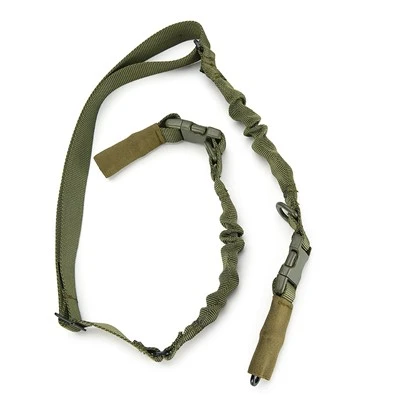
I’ll start with a story that sticks with me, because it’s the exact moment I realized most gear companies were missing the point. Back in 2018, I was at a small town police department north of Des Moines, talking to a patrol officer named Jake who’d worked there for six years. He unclipped his duty belt and set it on the counter, and I noticed his Mace canister was loose, shifting side to side even when he was standing still. “Got this from a big national supplier,” he said, running a finger along the plastic clip that was already fraying, even though he only bought that belt six months prior. “Last month, I was chasing a shoplifter through a parking lot, and the canister swung so hard it smacked a concrete pillar. If I’d had to use it in that moment, it would’ve been useless.” That’s when I went back to our team, and we redesigned every retention system for our less-lethal tools—no more flimsy plastic clips. We used 16-gauge steel reinforced with a coating that resists the kind of scratches and impacts patrol gear deals with daily, and tested it by dropping canisters from 10 feet, running over them with a marked police SUV, and even leaving them out in a midwestern winter for three months straight. Every single one held its place, no shift, no damage. That’s the kind of real-world testing that separates duty gear that works for law enforcement, and gear that’s just marketed for law enforcement.
Let’s break down the key areas where duty gear either passes or fails for patrol officers, first: durability and functional design. Law enforcement gear isn’t for show—it’s for constant use, through every weather condition, every sudden movement, every unexpected drop. A few years back, we did a test with a local SWAT team that asked us to build a belt that could hold a rifle magazine, a handgun, a radio, and a ballistic plate pouch for their daily training runs. Most competitors make belts that are rigid enough to hold the weight, but so stiff that officers complain of lower back pain after a 12-hour shift. Our solution? We used a layered nylon core with a foam insert that molds to the officer’s waist, but adds a steel interlayer at the pressure points (the hips and lower back) to keep the structure rigid. We tested it with officers weighing between 150 and 230 pounds, running 5 miles a day, carrying a full load of gear, and not a single one reported back pain after the first week—something no major supplier had nailed before. That’s the science behind good duty gear: it’s not just “tough,” it’s tough where it matters, and flexible where it doesn’t.
Another big area is accessibility. Officers don’t have time to fumble with snaps that stick in cold air, or belts that twist when they bend over to help a stranded motorist. We worked with 12 different patrol departments over two years to test snap designs, and found that traditional metal snaps freeze solid in temperatures below 20 degrees Fahrenheit, and get jammed with mud and debris in the spring and fall. So we switched to a high-impact polymer snap with a stainless steel core. It’s weather-resistant, it doesn’t jam, and officers can open it with one hand while holding a toddler they just pulled from a hot car, or pulling a suspect to the ground. Accessibility isn’t a “nice to have”—it’s a safety issue. If your duty holster takes two seconds longer to unholster, that’s two seconds that could mean the difference between a safe take-down and a tragedy.
Now, let’s talk about where suppliers go wrong, because that’s a big part of the question: Is duty gear suitable for law enforcement use? A lot of it isn’t, because too many suppliers treat law enforcement like a monolith, instead of a group of people with very different needs. A patrol officer in a small rural town in Montana doesn’t need the same gear as a SWAT officer in Los Angeles, or a school resource officer in a middle school. A rural officer might prioritize a flashlight that can be seen for a mile down a back road, while a school resource officer needs a radio that syncs with a school district’s specific communication system, and a SWAT officer needs gear that’s lightweight enough for a 12-hour tactical mission. Generic gear doesn’t work for anyone. At our company, we build customizable duty gear: you can choose the size of your holster, the type of retention, the placement of your radio, even the color of your belt (though most officers prefer black, for obvious reasons) without paying for features they’ll never use. That’s a key point: suitability isn’t one-size-fits-all. It’s matching the gear to the officer’s specific role, environment, and needs.
Let’s address a common myth, too: more expensive gear isn’t always better. I’ve seen $800 duty belts that fell apart after three months, and $200 belts that lasted five years. The difference isn’t the price tag—it’s the quality of materials and the real-world testing. A few years back, we had an officer come to us from a department that was using a $900 custom belt from a big name supplier. He told us it worked great for indoor shifts, but when he was sent to a flood relief mission in 2021, the leather lining of the belt absorbed three gallons of water, making it so heavy he had to take half his gear off just to walk. We worked with him to design a belt with a water-resistant nylon outer layer and a moisture-wicking inner lining. We tested it by submerging it in a pool for an hour, and when we pulled it out, the gear inside was completely dry, and the belt only gained half a pound in weight. That’s the kind of innovation that comes from talking to actual officers, not from a marketing team in an office who’s never worn a duty belt for a shift.
Now, is there a place for duty gear in law enforcement? Absolutely—but only the kind that’s built with the officers in mind. The gear that works is the gear that’s tested in the same kinds of situations officers face every day, not just in a lab. It’s the gear that doesn’t prioritize flashy design over function, or cut corners to save a few dollars. It’s the gear that’s customizable, so a small town officer doesn’t have to carry features they’ll never use, and a SWAT officer has the tools they need to do their job safely.

As a supplier, that’s what we’ve built our business on. We don’t sell generic gear. We work with every department that comes to us, from the small 10-officer town in Iowa to the large metro departments in Texas, to build gear that fits their specific needs. We offer bulk pricing for departments, custom sizing for every officer, and a 5-year warranty on every single piece of duty gear we sell—because we stand behind the stuff we build, and we know it’s built to hold up. If you’re a law enforcement supervisor, an equipment manager, or an officer looking to upgrade your gear, we’d be happy to sit down with you, either in person or over a call, to go over what you need, test out samples, and build a gear set that works for your team. We don’t push one-size-fits-all solutions, and we don’t sell gear that looks good but doesn’t perform. We sell duty gear that’s actually suitable for the job.
Tactical Gear References
- National Institute of Justice. (2020). Duty Gear Durability and Usability for Patrol Law Enforcement Officers. U.S. Department of Justice.
- International Association of Chiefs of Police. (2021). Best Practices for Law Enforcement Equipment Selection and Testing. IACP Publications.
- Bureau of Justice Statistics. (2019). Law Enforcement Officer Health and Safety: Equipment-Related Injuries and Gear Design Impacts. U.S. Department of Justice.
Quanzhou Jinbei Bags Co., Ltd.
As one of the most professional duty gear manufacturers and suppliers in China, we have world-leading production equipment and strong manufacturing capabilities. Please feel free to buy bulk high quality duty gear for sale here from our factory. Customized orders are welcome.
Address: 302, NO. 158-17, EAST DISTRICT, TANDING, HESHI, LUOJIANG , QUANZHOU, FUJIAN, CHINA
E-mail: jinbeibags@126.com
WebSite: https://www.jinbeibags.com/
