Hey there! As a supplier of metal stamping parts, I’ve been getting a lot of questions lately about the impact resistance of these parts. So, I thought I’d take a few minutes to chat about it and share some insights that might help you better understand what goes into making metal stamping parts that can stand up to a good whack. Metal Stamping Parts
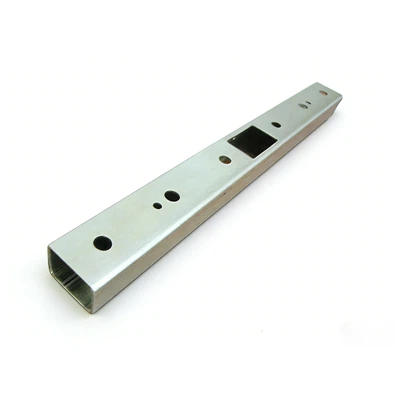
First off, let’s talk about what impact resistance actually means. In simple terms, impact resistance is a material’s ability to withstand sudden forces or shocks without breaking, cracking, or deforming. Think about a car bumper getting hit in a fender bender. You want that bumper to absorb the impact and protect the rest of the car, right? Well, the same principle applies to metal stamping parts in all sorts of applications, from automotive and aerospace to electronics and consumer goods.
Now, when it comes to metal stamping parts, there are a few key factors that can affect their impact resistance. The first one is the type of metal used. Different metals have different properties, and some are naturally more resistant to impact than others. For example, steel is a popular choice for metal stamping parts because it’s strong, durable, and can handle a lot of stress. Stainless steel, in particular, is known for its corrosion resistance and high impact strength, making it a great option for parts that need to withstand harsh environments.
Aluminum is another commonly used metal in metal stamping. It’s lightweight, which is a big advantage in applications where weight is a concern, like in the automotive and aerospace industries. While aluminum may not be as strong as steel, it still has good impact resistance, especially when alloyed with other metals. For instance, aluminum alloys like 6061 and 7075 are often used in high-performance applications because they offer a good balance of strength, weight, and impact resistance.
The second factor that affects the impact resistance of metal stamping parts is the stamping process itself. The way the metal is shaped and formed during stamping can have a big impact on its final properties. For example, if the stamping dies are not properly designed or maintained, the parts may have defects like cracks or weak spots that can reduce their impact resistance. On the other hand, if the stamping process is carefully controlled and optimized, the parts can be made with a uniform grain structure and consistent mechanical properties, which can improve their impact resistance.
One way to improve the impact resistance of metal stamping parts is through heat treatment. Heat treatment involves heating the metal to a specific temperature and then cooling it at a controlled rate to change its microstructure and properties. For example, quenching and tempering can be used to increase the hardness and strength of steel parts, which can in turn improve their impact resistance. Annealing, on the other hand, can be used to soften the metal and relieve internal stresses, which can also improve its ductility and impact resistance.
Another important factor to consider is the design of the metal stamping parts. The shape and geometry of the parts can have a big impact on their ability to withstand impact. For example, parts with sharp corners or edges are more likely to crack or break under stress than parts with rounded corners or edges. Similarly, parts with thin walls or small cross-sections may be more prone to deformation or failure than parts with thicker walls or larger cross-sections.
So, how do you know if a metal stamping part has good impact resistance? Well, there are a few ways to test it. One common method is the Charpy impact test, which involves striking a notched specimen with a pendulum and measuring the energy absorbed by the specimen during the impact. Another method is the Izod impact test, which is similar to the Charpy test but uses a different specimen geometry. These tests can provide valuable information about the impact resistance of the metal and help you determine if it’s suitable for your application.
As a supplier of metal stamping parts, I understand how important it is to provide parts that meet your specific requirements. That’s why we work closely with our customers to understand their needs and develop customized solutions that offer the best possible performance and value. Whether you need parts with high impact resistance for a critical application or parts with a specific shape and size, we have the expertise and experience to deliver.
If you’re in the market for metal stamping parts and want to learn more about our products and services, I encourage you to reach out to us. We’d be happy to discuss your requirements and provide you with a quote. You can contact us through our website or send us an email, and one of our sales representatives will get back to you as soon as possible.
In conclusion, the impact resistance of metal stamping parts is a critical factor to consider when choosing a supplier. By understanding the key factors that affect impact resistance, such as the type of metal, the stamping process, heat treatment, and design, you can make an informed decision and choose the parts that are best suited for your application. And if you need help or have any questions, don’t hesitate to contact us. We’re here to help you succeed!
Ratchet Tie Down References:
- Callister, W. D., & Rethwisch, D. G. (2013). Materials Science and Engineering: An Introduction. John Wiley & Sons.
- Schmid, S. M., & Boer, M. (2008). Metal Stamping: Design and Process Engineering. McGraw-Hill Professional.
Shengkun Precision Roll Forming Profiles (Shanghai) Co., Ltd.
As one of the most professional metal stamping parts manufacturers and suppliers in China, we’re featured by quality products and low price. Please rest assured to buy high-grade metal stamping parts made in China here from our factory. Contact us for pricelist and quotation.
Address: No.3 Workshop Building Lane2665 Yexin Highway Yexie Town Songjiang District Shanghai China
E-mail: sk@shengkun-rollforming.com
WebSite: https://www.sk-rollforming.com/
